
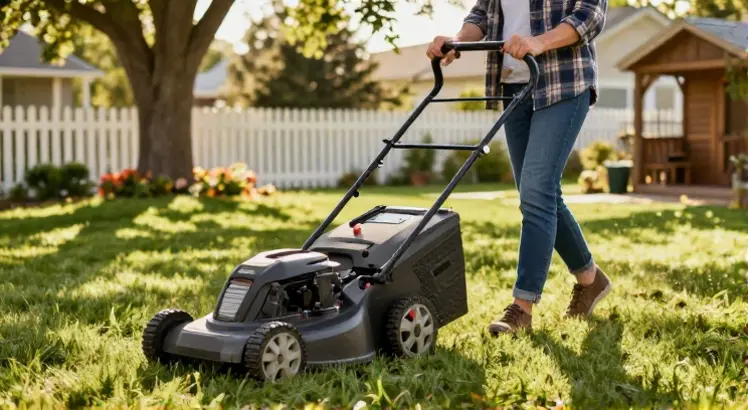
Standing in the hardware aisle, staring at rows of shiny machines, can feel overwhelming. You might wonder if you need a massive tractor or a tiny manual push reel. Finding what is a good size lawn mower comes down to much more than just horsepower, it is about matching the machine to your specific slice of land.
Getting this choice right saves you serious time and frustration. A mower that is too big will scalp your grass and be impossible to turn around tight corners. A mower that is too small will turn a quick Saturday chore into a full-day marathon, leaving you exhausted and resentful.
Before you spend your hard-earned money, you need to understand the relationship between cutting width, deck size, and your property size. Let’s walk through the exact steps to pinpoint the perfect fit for your lawn.

WORX Nitro WG752 21-Inch Brushless Push Mower
Check PriceUnderstanding Mower Sizes: Cutting Width vs. Deck Size
Most people get confused by terminology right away. The size of a lawn mower nearly always refers to its cutting width, not the physical footprint of the machine itself. This measurement is the swath of grass the blade cuts in a single pass.
Manufacturers measure this in inches. A typical push mower often cuts a 20- to 21-inch path. A large zero-turn mower might swallow a 60-inch or even 72-inch path in one gulp.
The deck size houses the blade, but the cutting width is the actual slicing diameter. Focusing on cutting width tells you exactly how many passes you need to finish the job. A wider deck means fewer trips back and forth across your turf.
Matching Mower Size to Yard Square Footage

Greenworks 40V 16-Inch Cordless Push Mower
Check PriceYard size is the single most critical factor. You can measure your lot size easily using the Google Earth measuring tool or simple pacing if you don’t have a survey. Once you have that number, every expert rule of thumb falls neatly into place.
Small Yards (Under 2,500 Square Feet)
In a compact space, maneuverability trumps raw speed. You often deal with tight gates, flower beds, and sharp corners. A massive mower here is a liability rather than a help.
- Ideal Cutting Width: 14 inches to 18 inches.
- Best Machine Types: Manual reel mowers or compact cordless electric mowers.
- Why: These are lightweight and easy to store on a wall hook.
A manual reel is often the best choice for these micro-lawns. It is quiet, requires zero gas, and gives a golf-course-quality cut. You can easily review our detailed thoughts on a classic push option in the Scotts reel mower review to see if that style fits your routine.
Medium Yards (2,500 to 5,000 Square Feet)
This is the suburban sweet spot. You have enough grass that a manual reel might feel like too much work on a hot day, but a riding mower is still overkill. Here, efficiency and comfort start to matter.
- Ideal Cutting Width: 20 inches to 22 inches.
- Best Machine Types: Gas-powered push mowers, high-voltage battery mowers, or self-propelled units.
- Why: A 21-inch deck clears this area in about 30 minutes without fatigue.
A wide walk-behind mower here gives you a perfect balance. You can finish the job quickly but still navigate around a swing set or a garden island. Self-propelled models become an attractive feature at this size because they do the hard pushing on slight inclines.
Large Yards (5,000 to 15,000 Square Feet)
Once you hit half an acre, walking behind a 21-inch mower turns into a serious workout. The sun, sweat, and time commitment can lead to you dreading lawn day. Upgrading your deck size changes the game entirely.
- Ideal Cutting Width: 30 inches to 42 inches.
- Best Machine Types: Wide-cut walk-behind mowers, stand-on mowers, or small riding tractors.
- Why: A 42-inch riding mower cuts your labor time by more than half compared to a standard push mower.
You can also explore options with a 30-inch turbo force style push mower. These are a hybrid solution, allowing you to walk but covering a wider path without needing a trailer to haul it.
Estates and Acreages (1 Acre and Larger)
When you have an acre or more, you are firmly in rider territory. Walking is simply inefficient and physically unsustainable. You need a machine that allows you to sit down and cover ground at speed.
- Ideal Cutting Width: 42 inches to 72 inches.
- Best Machine Types: Lawn tractors, garden tractors, zero-turn radius mowers, or diesel mowers.
- Why: A zero-turn with a 60-inch deck can mow three acres in under one hour.
Speed matters here, but so does durability. The engine and hydrostatic transmission need to handle long periods of constant use. A residential lawn tractor often tops out efficiently at about 3 acres, while beyond that, a commercial-grade zero-turn makes more sense.
Why Terrain and Obstacles Trump Square Footage

MZK LM13B4 13-Inch Brushless Cordless Lawn Mower
Check PriceNumbers do not tell the whole story. A perfectly flat, square, half-acre lot is easy for a small rider. A half-acre lot with steep slopes, dozens of trees, narrow side passages, and a playground is a nightmare for that same machine.
Count your obstacles before you buy. Every tree, lamp post, and flower bed means you have to trim around it or turn. A zero-turn mower excels at navigating obstacles quickly, but its wide rear deck can swing out and hit things if you cut too close.
Slopes dictate the power source and drive type. For hills, a heavy-duty self-propelled walk-behind is often safer and more stable than a riding mower. Look for larger rear wheels on a walk-behind mower to gain better traction on uneven ground.
Gate Width: The Forgotten Dealbreaker

KOMASTY 40V 16-Inch 2-in-1 Cordless Mower
Check PriceThis single oversight has caused more returns than any other issue. If your mower cannot fit through your fence gate, it is useless. Measure the narrowest point you need to squeeze through before you shop.
Standard walk-behind mowers, with a 21-inch deck, typically slide through a 24- to 30-inch gate with ease. However, a wide-cut 30-inch walk-behind often requires a significantly larger opening. Riding mowers obviously need a double gate or a separate driveway access point.
In many city yards, the back gate is only 32 inches wide. If you buy a large 33-inch cutting deck without a side discharge chute lift, you might have to haul the mower through the house, which is a disaster you want to avoid.
Engine and Powerplant Size vs. Deck Size
A big deck is useless if the engine does not have enough torque to spin the blades through thick grass. You must match the powerplant to the cutting width. Smaller electric mowers struggle with a 21-inch deck if the voltage is too low.
For gas mowers, engine displacement measured in cc (cubic centimeters) is key. A 140cc engine runs a 20-inch deck, while a 200cc engine handles a 22-inch deck with high-lift blades for bagging. If you try to run a large deck with a weak engine, you will bog down and stall constantly.
Battery mowers have similar rules. A 40-volt system drives a 17-inch to 20-inch deck moderately well. But for a full 21-inch deck with proper mulching capability, you will want an 80-volt system. The batteries need the amp-hour capacity to finish the job without fading.
Grass Type and Growth Habits

Greenworks 40V 16-Inch Brushless Push Mower
Check PriceSome grasses are thick, juicy, and hard to cut. St. Augustine and Bermuda grass are notorious for straining smaller machines. If you have these aggressive turf types, size up your engine strength, not just the deck width.
A reel mower often works best on fine cool-season grasses like fescue or bluegrass. It does not handle fast-growing, stalky warm-season grasses well without a sharp blade. However, if you learn the proper technique, you can still get a clean cut. Understanding how to cut wet grass is also vital because damp, clumpy growth instantly reduces the effective width of your discharge chute, requiring a more powerful engine.
If you bag your clippings, the resistance on the engine increases. An undersized engine, matched to a wide deck in thick grass with the bag attached, is the perfect recipe for a clogged chute and an overheated motor.
Mulching, Bagging, and Side Discharge Capabilities
BLACK+DECKER Electric Lawn Mower, Weed Eater and Edger 3-in-1 Combo, Corded 12-Inch 6.5 Amp Electric Weed Wacker and Compact Push Mower (BESTA512CM)
Check PriceThe size of the mower determines how well it processes clippings. A wide deck with a deep dome creates more tunnel space for the grass to circulate multiple times. This finely chops the grass for mulching.
If you plan to mulch, a smaller deck can sometimes outperform a cheap large deck because the smaller volume concentrates the clippings. Marketing often focuses on the cutting width number, but the depth of the stamped steel deck dictates the air flow quality.
For bagging, a high-lift blade is essential. The width of the deck plus the height of the blade creates the vacuum that throws clippings into the bagger. A very small 14-inch electric mower often fails at bagging anything but the lightest dustings of dry grass.
Storage Constraints in Your Garage or Shed

LawnMaster MEB1114K Electric Corded Lawn Mower 15-Inch 11AMP
Check PriceYou might absolutely love a 72-inch zero-turn, but if it requires you to park your car on the driveway permanently, it is not the right size for your life. Mowers take up significant real estate, especially riding tractors.
Measure your available storage space. A standard push mower folds up tightly and requires a footprint of about 2 feet by 3 feet. A compact riding mower requires a space of roughly 5 feet by 6 feet. A large zero-turn might need a 7-foot by 8-foot slot.
Vertical storage is an excellent hack for small push mowers. Some models allow you to tip the handlebar straight up, storing the unit vertically against the wall, saving almost 50% of the floor space.
Frequently Asked Questions
Is a 21-inch mower good for a 1-acre lot?
No, a 21-inch mower is generally too small for a full acre. You would spend roughly two hours or more pushing a walk-behind mower. For 1 acre, look at a 42-inch riding tractor or a substantial 30-inch+ commercial walk-behind to reduce physical strain and time spent.
How do I measure my lawn for mower size?
Use a satellite mapping tool to trace your turf area excluding the house, driveway, and garden beds. This gives you the square footage. Compare that number to the cutting width guides: under 2,500 sq ft for 14-18 inches, or over 15,000 sq ft for a 42-inch+ rider.
Does a wider deck mean a worse cut?
Not if the ground is level. However, on an uneven, bumpy lawn, an ultra-wide single-piece deck can scalp the high spots and miss the low spots. In those cases, a smaller 30-inch deck or a mower with floating deck suspension will produce a prettier finish than a rigid 60-inch deck.
What is the best size mower for a hilly yard?
For steep slopes, walk-behind machines are the safest. A 21-inch heavy-duty self-propelled rear-wheel-drive mower gives you the most control. Avoid wide riding mowers on slopes exceeding 15 degrees, as they pose a rollover risk unless you have a specialized hillside mower with a low center of gravity.
Can I use a large riding mower on a small lawn?
Technically yes, but it is inefficient. You will likely compact the soil, rip the turf on sharp turns, and struggle to mow the edges. A landscaping expert from PennState Extension notes that repeated traffic from heavy equipment like oversized mowers can lead to significant soil compaction in smaller confined areas.
Final Verdict on Choosing the Right Mower Size
Choosing what is a good size lawn mower is about respecting your time and your body. The right machine turns a grueling chore into an efficient, almost enjoyable task. The wrong one collects dust or goes up for sale on a swap-and-sell site within six months.
Anchor your decision to the square footage, but let your common sense win on terrain and storage. A compact 21-inch deck remains the versatile champion for most urban homes, while a 42-inch rider is the undeniable king of the suburbs.
Measure your gate width, check your garage space, and be honest about how much time you want to spend walking your property. Pick the machine that fits these factors, and you will never second-guess the purchase again.
