
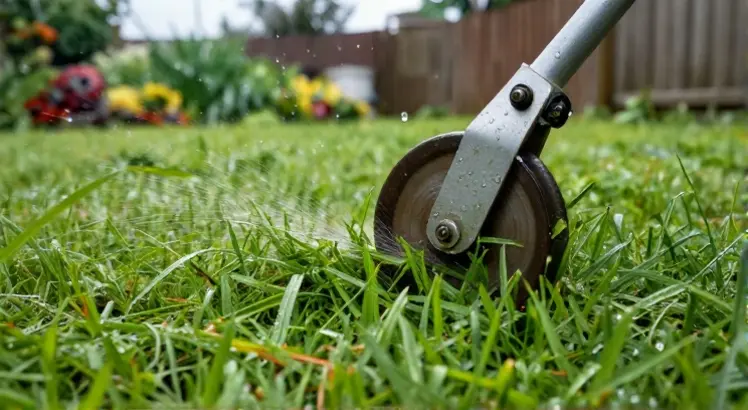
The forecast calls for a week of rain, but your turf is already looking like a jungle. You might be tempted to push through the drizzle and mow anyway, but tackling a soggy lawn is a delicate process. Knowing exactly how to cut wet grass without damaging your equipment or killing your lawn is a skill every homeowner needs. If you don’t adjust your technique, you risk compacted soil, widespread fungus, and an uneven cut that turns your green carpet into a muddy mess.
This guide is built on real-world experience dealing with temperamental weather and stubborn turf. We will walk you through the specific adjustments required for your mower, the safety risks you absolutely cannot ignore, and the post-cut cleanup that prevents disease. Whether you have a slight morning dew or a full-on saturated field, these steps will help you get the job done right.

Why Cutting Wet Grass is Problematic
Before we dive into the how, it is crucial to understand why turf professionals always advise against mowing in the rain. It is not just an old wives’ tale, there are three primary enemies you face when you mow damp turf: clumping, tearing, and compaction. Recognizing these issues will help you mitigate them effectively.
The Danger of Clumping and Clogging
Dry grass stands upright and meets the blade crisply, allowing it to shoot out of the chute or into the bag with ease. Wet grass is heavy and sticky. As the blade spins, waterlogged clippings mat together instead of dispersing. These large clumps fall off the deck and smother the living grass underneath, blocking sunlight and creating dead spots almost overnight.
Additionally, the underside of your mower deck becomes a magnet for this sludge. A clogged deck reduces airflow and forces the engine to work exponentially harder. If you feel the mower bogging down every few feet, you are likely pushing a half-inch layer of caked-on grass across your lawn rather than cutting anything.
Tearing Blades and Fungal Disease
A razor-sharp, high-speed blade shears the grass, leaving a clean cut that heals quickly. When grass is wet, the blades bend and slip away from the cutting edge. Instead of a clean shear, the blade rips and shreds the tips of the grass. These jagged, frayed wounds are open invitations for fungal pathogens like Brown Patch and Dollar Spot to infiltrate your turf.
Soil Compaction and Tire Ruts
This is the most long-lasting damage you can inflict. Soil saturated with water is structurally weak. The weight of a walk-behind mower, and especially a heavy riding mower, presses down and collapses the vital air pockets in the soil. This is compaction. Worse yet, the tires can sink in and create deep physical ruts. These ruts are not just an eyesore, they cause scalping on the high side and long-term drainage issues.
Pre-Cut Preparation: Setting Yourself Up for Success

Greenworks 40V 16-Inch Cordless Push Mower
Check PriceIf you decide the mow must happen, preparation is your best defense. You cannot treat wet grass like dry grass and expect to get away with it. You need to modify your equipment and your expectations before you pull the starter cord.
How to Sharpen and Clean the Mower Blade
Sharpness is non-negotiable in wet conditions. A dull blade amplifies the tearing effect tenfold. Before you start, touch up the blade or ensure it has a keen edge. If you need a refresher on this process, especially after hitting damp, hidden debris, revisit our complete guide on how to sharpen your lawn mower blades properly. A sharp blade is the key to minimizing leaf damage.
Equally important is the deck itself. Spray the underside of a clean deck with a graphite or silicone-based non-stick coating, or even a light layer of vegetable oil. This creates a barrier that prevents the grass soup from sticking as aggressively, allowing the clippings to flow out more smoothly.
Adjusting the Cutting Height
The number one mistake people make when learning how to cut wet grass is cutting it too short. You must raise the deck. Set your mower to the highest or second-highest setting possible. You are aiming to take off no more than the top third of the grass blade. Reducing the leaf volume minimizes the weight of the clippings and gives the remaining plant enough vigor to recover from the stress.
Why You Must Ditch the Bag
A bagging attachment in wet grass is a recipe for severe clogging. The heavy clumps will fill the bag in seconds, blocking the chute and stalling the blade. Instead, you should almost always side-discharge. This throws the clippings out to the side, preventing them from piling up on top of the freshly cut row immediately. You will likely need to make a second pass with a blower or rake later, but discharging keeps the engine running.
The Step-by-Step Technique for Mowing Wet Grass

KOMASTY 40V 16-Inch 2-in-1 Cordless Mower
Check PriceWith the mower prepped, it is time to change how you walk. Speed and direction are your primary tools for managing moisture. Rushing will result in instant clogs and a motor that burns out trying to churn through sludge.
Slow and Steady Wins the Race
Slow your forward walking speed by about 50% compared to dry mowing. This gives the blade enough time to chop the slippery grass multiple times, effectively turning it into a finer mulch that is less likely to mat. If you are using a self-propelled mower, disengage the drive and push manually. This forces you to control the pace and prevents you from plowing the mower into a heavy patch that floods the engine.
The Double-Cut Method
If the grass has gotten very long and is also wet, do not attempt to scalp it down to your final desired height in a single pass. This will choke your machine instantly. Instead, employ a double-cut strategy.
- First Pass (High): Set the deck at its absolute highest setting. Mow the entire lawn to knock down the top biomass. This pass will look messy and might leave clumps, but it removes the bulk of the water weight.
- Second Pass (Lower): Lower the deck by one notch after the grass has had 30 to 60 minutes to dry slightly from the increased airflow. Mow again at a 90-degree angle, either perpendicular or diagonal, to your first pass. This cross-cutting chops the clumps from the first pass and distributes them evenly.
Mastering the Wet Turning Technique
Turning a mower on wet grass is where the most severe tire damage happens. A stationary zero-turn pivot grinds the tire into a divot. Whenever you need to change direction, avoid pivoting on the drive wheels. Instead, pop a small wheelie by pushing down on the handlebar, lifting the front of the deck, and physically swinging the mower to face the new direction before setting the front wheels down gently. This prevents that classic circular brown spot where you turned around.
Crucial Safety Considerations You Cannot Ignore

WORX Nitro WG752 21-Inch Brushless Push Mower
Check PriceBeyond the health of your lawn, your personal safety is at greater risk when moisture is involved. The slick conditions change the dynamic of the cutting process entirely.
Electrical Shock Hazards
You should never, under any circumstances, mow wet grass with an electric corded mower. The risk of slicing through the cable is higher when you are distracted by clogs, and water is a perfect conductor for a lethal shock. Even battery-powered equipment requires caution, always verify that the battery housing is fully sealed and securely locked, and never spray the unit with a hose while the battery is inserted.
Slips, Falls, and Striking Debris
Wet soles on wet turfgrass create a near-frictionless surface. Wear shoes or boots with aggressive tread, like a Vibram sole. Never mow in sandals or sneakers with a worn-out bottom. Additionally, water hides obstacles. Pine cones, dog toys, and rocks sink into the canopy and vanish. A hidden rock can become a deadly projectile when caught by the blade. Walk the yard with a rake quickly to inspect for hidden dangers before you fire up the engine.
Post-Mow Cleanup and Lawn Recovery

Greenworks 40V 16-Inch Brushless Push Mower
Check PriceThe work does not end when the engine turns off. How you handle the aftermath determines whether you saved the lawn or ruined it. Leaving wet, heavy clippings on the surface is the fastest way to suffocate your grass.
Getting Clippings Off the Lawn
Since you used side-discharge, you will likely have windrows of clippings where the mower ejected them. Do not leave these overnight. Use a powerful leaf blower, such as a backpack unit like a Husqvarna, to scatter the rows. The air also helps dry out the standing canopy. If the clumps are too heavy to blow, use a leaf rake to gently break them up. This is tedious but essential for preventing mold.
How to Clean a Mower Jammed with Wet Grass
Never tip a gasoline-powered mower onto its side with the air filter carburetor facing down, as oil and gas will flood the filter. Always tip it backward with the spark plug pointing up. Use a wooden stick or a plastic scraper to chisel the compacted mud and grass from the deck. Do not use a metal tool that could scratch the deck and invite rust. Once cleaned, let the deck air-dry completely to prevent corrosion.
Choosing the Best Equipment for Damp Conditions

Greenworks 80V 21-Inch Brushless Push Mower, 2 Batteries
Check PriceIf you live in a perpetually damp climate, your choice of machinery matters. Certain mower types handle moisture better than others, and using the wrong one will always result in a fight.
- Rear-Wheel Drive Self-Propelled Mowers: These provide better traction in slippery grass than front-wheel drive models. Front-wheel drives tend to slip and lose grip when the bag fills up and lifts the front end. If you notice your drive system slipping often, you might be asking yourself is your lawn mower’s front wheel drive going out, and wet grass will certainly reveal those traction weaknesses immediately.
- High-Lift Blades vs. Mulching Blades: A standard mulching blade creates an internal vortex to chop grass fine, but wet grass clogs this system instantly. A high-lift blade, designed for bagging, has more aggressive angles that physically force the wet pulp out of the chute, helping to prevent blockages.
Safety Standards from the Experts
For comprehensive safety protocols regarding electrical safety and slippery conditions, it is wise to review established safety guidelines. According to the guide on lawn mowing safety, operator stability and proper footwear are just as critical as mechanical maintenance when dealing with adverse conditions. Staying upright and in control prevents the vast majority of wet-weather accidents.
FAQ: Common Wet Grass Cutting Scenarios
Is it okay to cut grass with morning dew on it?
Morning dew is generally the lightest form of moisture. While not ideal, it is safer than mowing right after a storm. Wait until the sun has hit the grass for an hour and the dew begins to bead off. If you walk through it and your shoes are merely damp, not sopping, you can proceed with caution and a sharp blade.
Can wet grass dull my mower blade?
Water itself does not dull steel quickly, the debris hidden in the water does. Wet grass holds silt, sand, and microscopic dirt particles from rain splash-up. This slurry acts as a liquid sandpaper, wearing down the cutting edge significantly faster than dry grass. You will need to sharpen your blades more frequently if you mow wet regularly.
What should I do if my lawnmower starts smoking in wet grass?
Usually, this is not smoke but steam. Water hitting the hot muffler creates vapor. If it is truly smoke (smelling of burning oil or rubber), the engine is overloaded. Stop immediately. Clear the clogged chute, let the engine idle to cool down, and try again at a much higher cutting height. Check your engine oil level as well, as a slipping engine on an incline can cause oil to bypass the rings.
Will mowing wet grass kill my lawn?
One single emergency mow on wet grass will likely not kill a healthy lawn if you clean up the clippings and the sun comes out shortly after. Repeated mowing in wet conditions, however, decimates the root structure through compaction and leads to fungal takeover. It is a recovery process, not an instant death sentence, if handled correctly.
Final Thoughts on Mowing Damp Lawns
Mastering how to cut wet grass comes down to accepting that you must break nearly every habit you have for dry mowing. You cannot walk fast, you cannot cut short, and you cannot ignore the aftermath. It requires a sharp blade, a tall deck height, a side-discharge setup, and a willingness to clean up manually afterward.
If the soil is so saturated that you are leaving footprints in the turf, stop immediately, that is the universal sign the ground is too delicate for heavy equipment. For lightly damp conditions, patience and proper technique will get you through. Always prioritize your safety by wearing sturdy boots and waiting for electrical storms to pass, and remember that a slightly tall, healthy lawn always looks better than a short, scarred one. Clean up thoroughly when you are done to prevent disease, and your lawn will bounce back with the next sunny day.
