
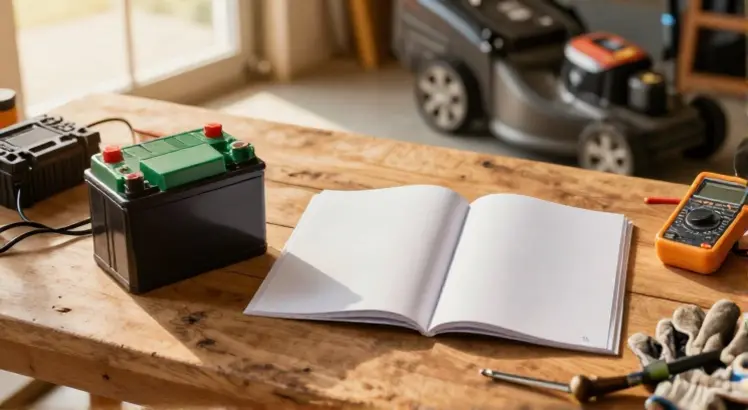
The heart of your electric start mower is not the engine, it is the battery. A dead battery turns a promising Saturday morning into a frustrating search for jumper cables. This lawn mower battery guide cuts through the confusion. You will learn exactly how to pick the right power source and keep it alive for years.
Maybe you switched from gas to a full battery-powered model. Perhaps you just need a new starter brick for your riding tractor. Either way, chemistry and sizing matter. Stick with me, and you will never get stranded in tall grass again.

WORX Nitro Cordless Lawn Mower, 21″ Electric Mower, 2 × 5.0 Ah Batteries & Charger Included, WG752
Check PriceUnderstanding the Two Worlds of Lawn Mower Batteries
Before you swipe a credit card, you must identify your machine’s role. The term “lawn mower battery” actually splits into two distinct categories. You have the starting battery for gas engines and the deep-cycle pack for electric motors. Mixing them up leads to poor performance and rapid failure.
Riding mowers and zero turns use batteries to crank the engine. It is a short, sharp burst of energy, just like your car. The alternator then takes over to run the electronics. These batteries focus on Cold Cranking Amps (CCA), not long runtime.
Battery-powered push mowers are entirely different beasts. The battery is the sole fuel source. It needs deep capacity, measured in Amp-hours (Ah), to spin the blade for an hour or more. These packs are often part of a multi-tool ecosystem, like the lineup you see in a detailed power platform breakdown.
Decoding the Basic Battery Types
Not all black boxes are created equal. The chemistry inside determines how you maintain it. Walk into any hardware store, and you will face three main options for starter batteries. For cordless mowers, Lithium-Ion has essentially won the war.
Lead-Acid: The Affordable Standard
If you own a tractor mower, this is likely hiding under your seat. These are wet batteries filled with electrolyte. They are cheap and reliable, but they demand attention.
- You must check and top off the water levels with distilled water.
- They can spill if tipped over, so secure them tightly.
- Extreme cold drains them fast, requiring a trickle charger in winter.
Absorbent Glass Mat (AGM): The Upgrade
AGM batteries are the modern replacement for old-school lead-acid. The acid is suspended in fiberglass mats, making them spill-proof. You get a truly maintenance-free experience.
AGM units handle vibration better, which is crucial on a bumpy lawn. They also hold a charge longer in storage. I recommend the AGM route if you park your riding mower for months during the off-season.
Lithium-Ion (Li-Ion): The Cordless King
This is the standard for walk-behind electric mowers. These packs weigh a fraction of lead-acid but deliver steady power until empty. You get no voltage sag, meaning the blade spins at full speed right until the battery dies.
However, heat is their enemy. You must let a hot Li-Ion pack cool down before slapping it on the charger. Most modern chargers have a timeout feature to protect the cells, a safety element echoed in fundamental battery safety research.
Lawn Mower Battery Guide: Sizing and Specifications

EGO POWER+ 21″ Cordless Electric Lawn Mower Kit, Self-Propelled – LM2135SP
Check PriceBuying a battery that does not physically fit is a headache. Size groups, like U1, are standardized. But you also need to match the terminal layout and cranking power. Do not rely on memory, take a photo of the old battery in the tray before leaving home.
CCA is the most critical number for gas mowers. It measures the battery’s ability to start an engine in cold weather. A higher CCA number means better starting power. Voltage is non-negotiable, a 12-volt system needs a 12-volt battery, swapping for a 6-volt will destroy the circuit.
For electric mowers, voltage and Amp-hours rule. Higher voltage often means more torque, but it locks you into a specific manufacturer’s platform. A 40V battery from one brand will not power a 40V tool from another because the housing and electronics differ.
Mastering Charging and Winter Storage
Improper storage kills more batteries than old age. You cannot just park the mower in a shed for five months and hope for the best. A discharged battery left in the cold will freeze and crack internally.
For lead-acid and AGM starters, buy a smart maintenance charger. These devices, often called “float” chargers, monitor the voltage. They cycle on and off to prevent overcharging, keeping the plates in perfect condition without boiling the fluid dry.
Lithium-Ion packs hate being stored at 100% or 0%. The sweet spot is about 40% to 50% charge. If you finish your last mow of the season, run the battery down slightly before storing it inside a climate-controlled space. Never leave Li-Ion cells in a freezing shed.
Troubleshooting a Battery That Won’t Charge

KOMASTY 40V Electric Lawn Mower 16″ Cordless, 2X4.0Ah Battery and 2 Chargers
Check PriceThe charger blinks red, and you sigh. Before you declare the battery dead, run through three simple checks. Start with the easiest fix first, the connections.
- Corrosion: A white, powdery substance on the terminals blocks the current. Mix baking soda and water with a wire brush to scrub it off. Dry the terminals completely before reconnecting.
- Sleeping Battery: If a Lithium-Ion pack drains too low, the Battery Management System (BMS) puts it into sleep mode for safety. A standard charger might not recognize it. You might need to “jump” it gently with a compatible battery briefly to wake it up, though this is a risky move for beginners.
- Bad Voltage Meter: Use a multimeter. A healthy 12-volt battery should read around 12.6 volts at rest. If it shows 10.5 volts, you have a dead cell that no charger can fix.
The Digital and Safety Upgrade

Greenworks 80V 21″ Brushless Cordless (Push) Lawn Mower, (2) 2.0Ah Batteries and 30 Minute Rapid Charger Included
Check PriceModern batteries are getting smarter. Many new Li-Ion packs feature a “Fuel Gauge” button. Press it, and LED lights tell you the exact remaining capacity. This is a massive upgrade over the guesswork of old lead-acid bricks.
Safety interlocks are also standard now. The battery talks to the mower. If the mower is overheating or the blade is jammed, the battery cuts power instantly. This protects the motor and prevents physical injury from kickback.
Frequently Asked Questions

EGO 21″ Self Propelled Mower With Dual Toggle Kit (6.0Ah, 320W Charger)
Check PriceCan I jump-start a riding mower with my car?
Yes, but with massive caution. Modern mowers run 12-volt systems. However, do not have the car engine running. The car’s alternator pumps out high amps that can fry the mower’s voltage regulator. Use jumper cables with the car off, treating it as a passive battery donor only.
How long do lawn mower batteries last?
A standard lead-acid starter usually lasts three to four years if watered properly. AGM batteries can push five to six years. Lithium-Ion packs are rated by charge cycles, often 500 to 1,000 full cycles, which translates to roughly five to ten years for a typical homeowner cutting weekly.
Why does my electric mower battery overheat and shut off?
This is a thermal overload shutdown, and it is a good thing. You are likely cutting thick, wet grass that forces the motor to draw massive amps. Raise the cutting height, slow your walking speed, and ensure the air vents are clear of grass clippings.
Are higher Ah batteries better?
Yes, for run time, but they are heavier and more expensive. An 8.0 Ah battery on a cordless mower will cut significantly more grass than a 2.5 Ah battery. However, if you have a tiny postage-stamp yard, the extra weight of a high-capacity pack just makes pushing harder without real benefit.
Final Thoughts on Your Power Source
A lawn mower is only as reliable as its battery. You need to match the chemistry to your weather and laziness level. If you neglect maintenance, stick with AGM. If you want ultimate lightweight power, go Lithium-Ion and bring the pack indoors.
Do not treat the battery as an afterthought once the season ends. The care you give it during December determines whether you smell like fresh-cut grass or stale gasoline come April. Invest in a quality charger, clean the terminals, and your mower will start on the first pull, every time.
Pick the right specs, charge smart, and get back to enjoying the view of a freshly striped lawn instead of staring at a silent engine.
