
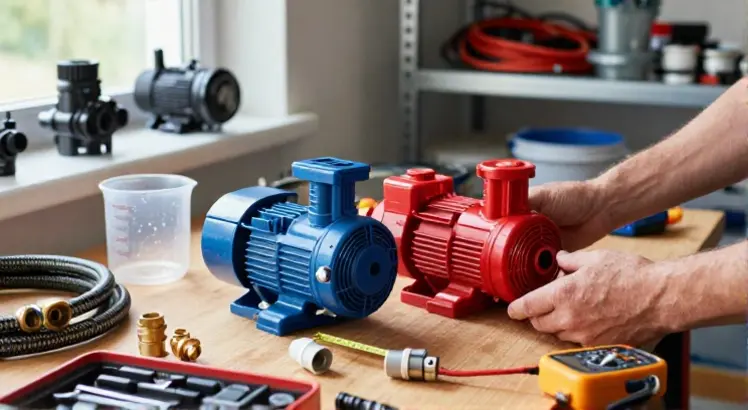
Moving water from one place to another feels like a simple task, but picking the wrong pump turns a quick job into a frustrating mess. Maybe you need to drain a flooded basement, irrigate a garden from a rain barrel, or empty a pool for the winter. A water transfer pump handles these chores with ease, but only if you match the tool to the task.
Hardware stores stock dozens of models with confusing labels like shallow well, utility, and submersible. You do not need an engineering degree to understand them. You just need to know the right questions to ask before you spend your money. This guide simplifies How to Choose a Water Transfer Pump into a few clear, manageable steps so you can shop with confidence.

Understanding Water Transfer Pump Basics
Before diving into specs, you must understand what a water transfer pump does. Unlike a sump pump that lives permanently in a pit, a transfer pump is portable. You set it up temporarily to move clean or slightly dirty water from a source to a destination. The source could be a barrel, a pond, a pool, or a flooded floor. The destination is usually a hose leading to a drain, a garden bed, or a storage tank.
Manufacturers rate these pumps by horsepower, but the numbers that truly matter are flow rate and head pressure. Ignoring these two specs is the most common mistake beginners make. A pump that looks powerful on the shelf may fail completely if you ask it to push water uphill or through a long hose.
Types of Water Transfer Pumps

TecHome 115V Portable Transfer Pump
Check PriceThe market splits into a few distinct categories. Your specific project determines which type works best. Using a submersible pump when you need a utility pump leads to poor performance or burnt-out motors.
Submersible Pumps
A submersible pump sits directly in the water, pushing fluid up through a discharge hose. These units excel at quiet operation because water muffles the motor noise. They also prime themselves instantly since they sit inside the liquid source. You lower them into a pool, a cistern, or a deep rain barrel.
However, the motor relies on surrounding water for cooling. Running a submersible pump dry destroys the seals within minutes. They also struggle with debris, so you need a screened intake if you work with pond water or a flooded yard. For deep water sources where a surface pump cannot physically pull, a submersible is your only option.
Utility or Transfer Pumps
These pumps, often called non-submersible pumps, sit on dry ground next to the water source. You drop an intake hose into the water and connect a discharge hose to the other port. Utility pumps handle a bit more debris than submersibles. Many pass small solids up to half an inch without clogging.
They do generate more noise because the motor sits open in the air. They also require a manual prime, meaning you pour water into the pump head before it can create suction. If you neglect this step, the impeller spins dry and the pump never pulls water. For most homeowners draining hot tubs, pools, or shallow flooded areas, a utility pump strikes the best balance of power and portability.
Booster or Sprinkler Pumps
If you already have a water source with low pressure, a booster pump increases that pressure for irrigation. Gardeners often install these near rain collection tanks to drive sprinklers. They pull water from a tank and pressurize it enough to run multiple drip lines or standard sprinkler heads. Do not confuse these with trash pumps or high-head utility pumps.
Key Factors for High-Quality Pump Selection

KITLUCK 330GPH Water Transfer Pump
Check PriceOnce you narrow down the pump type, you face the real math. You do not need exact calculations, but you need honest estimates. Guessing wrong means you drag hoses around a yard and get only a trickle of water at the end.
Flow Rate (GPH and GPM)
Flow rate measures how much water the pump moves in a given time. Manufacturers list this as gallons per hour (GPH) or gallons per minute (GPM). A pump rated for 1,200 GPH moves 20 gallons per minute. For most home tasks, 20 to 40 GPM is more than adequate. A pool cover pump might only move 350 GPH because suction head matters more than raw volume.
Check the rating at the actual discharge point. A pump advertised at 2,000 GPH delivers that number at the outlet port with zero lift and zero friction. Once you add a 50-foot hose and lift the water 6 feet, the real flow drops significantly. Always check a pump curve chart in the manual if the manufacturer provides one.
Head Height (Total Dynamic Head)
Suction head is how far up the pump lifts water from the source. Discharge head is how high it pushes water from the pump. Total dynamic head combines both, plus friction loss from hoses. A pump with a max head of 25 feet may stop flowing entirely if you try to push water up a 30-foot hill.
For every 10 feet of horizontal hose run, add roughly 1 foot of head as a friction loss estimate. If your pump sits 5 feet above a pond surface and you push water 10 feet up and 100 feet horizontally, your total head approaches 25 feet. Pick a pump rated well above that figure. Running the motor near its absolute limit wears out seals quickly.
Suction Lift Capability
Non-submersible pumps fight physics to pull water up from below. Atmospheric pressure limits suction lift to about 25 feet at sea level, and that is a perfect theoretical limit. Realistically, you should never try to pull water more than 20 vertical feet. A pump rated for a 25-foot lift will pull water from 15 feet comfortably but struggle and cavitate at 25 feet.
Cavitation happens when the pump creates bubbles in the water line due to low pressure. Those bubbles collapse violently and pit the impeller. If you hear gravel rattling inside the pump head, you have a cavitation problem. Lower the pump closer to the water surface or reduce the suction hose length to fix this.
Water Quality and Debris Handling
Clear water pumps pass only clean liquid. Any sand, leaves, or pine needles jam the impeller. If you pump from a pond or a flooded lawn, you need a semi-trash or trash pump. Semi-trash pumps handle solids up to half an inch, while full trash pumps pass chunks up to an inch or larger. These pumps cost more but survive jobs that destroy a standard utility pump.
Gardeners moving rainwater from collection barrels can usually use a clear water pump since the intake gets filtered. Pool owners pumping chemically treated water need seals rated for chlorine exposure. Using a pump with standard buna seals in chemical applications means the seals dissolve and leak within a season.
Power Source Considerations
Electric pumps remain the most popular choice for homeowners. They run on standard 120V outlets and turn on with a switch. If you work far from a power source, a gas-powered pump is the alternative. Gas models achieve higher flow rates and better portability but require regular engine maintenance.
Battery-powered transfer pumps are a newer category growing in popularity. They cannot match the peak power of corded or gas units, but they excel at light-duty tasks. Draining a water heater, emptying a fish tank, or moving rainwater from a 55-gallon barrel works perfectly on a battery pump. If you already own a battery platform for power tools, look into a compatible water pump from that brand.
Material and Build Quality
Pump housings come in plastic, cast iron, or stainless steel. Plastic housings crack if they freeze with water inside or get dropped on concrete. They work fine for indoor seasonal use, but outdoor setups deserve a metal housing. Cast iron lasts decades but rusts if you leave it in the rain. Stainless steel resists corrosion and holds up to chemical treatments.
Seal material matters just as much. Viton seals handle chemicals and high temperatures better than standard rubber. If you plan to transfer hot water from a water heater or boiler, confirm the seal rating before buying. Most homeowner-grade pumps max out around 120°F. Exceeding that temperature deforms seals and voids warranties.
Portability and Storage
A cast iron pump may weigh 40 pounds, which makes carrying it up a basement staircase a chore. Plastic models weigh under 10 pounds and feature carry handles. Think about where you store the pump during the off season. Freezing temperatures destroy any pump that holds residual water. Always drain and blow out the lines before winter storage.
How to Choose a Water Transfer Pump

ECO-WORTHY 33-Series Pressure Pump
Check PriceA clear method helps you pick the right spec without getting overwhelmed. Work through these questions step by step.
- Source location: Is the water source above or below the pump? If below, you need a good suction lift rating.
- Water depth: If the water sits deeper than 20 feet, skip surface pumps and go with a submersible.
- Desired flow: Draining a 5,000-gallon pool in two hours requires about 42 GPM. Drip irrigation might need only 5 GPM.
- Discharge distance: Measure the length and vertical rise of your discharge hose. Add friction loss to your head calculation.
- Debris content: Clear, sandy, or muddy water each demands a different pump class.
- Power access: Decide between electric, battery, or gas well before you visit the store.
Let us say you want to irrigate a garden from a creek 15 feet below and 100 feet away. You need a utility pump with at least a 25-foot suction lift, a discharge head of 10 feet plus friction, and a flow rate sufficient for your sprinklers. A 1-horsepower shallow well pump or high-head utility pump fits that scenario. A standard pool cover pump fails immediately because it cannot handle the suction lift.
Common Mistakes to Avoid When Choosing a Water Transfer Pump

DEWALT 20V MAX Transfer Pump
Check PriceShoppers frequently overlook small details that ruin a pump within the first hour. The first major mistake is ignoring the priming requirement. Surface pumps must have water poured into the pump head before turning on. Running them dry for even 30 seconds scorches the impeller seal.
Another mistake is using the wrong hose diameter. A pump with a 1-inch discharge port performs terribly if you choke it down to a standard 5/8-inch garden hose immediately. The restriction creates back pressure that overheats the motor. Use the full port size as far as possible, then reduce only at the last connection if absolutely necessary.
Buying too much pump is also a problem. A 5-horsepower trash pump empties a hot tub in 30 seconds, splashing water everywhere and risking structural damage. Overkill costs more money up front and makes the tool harder to handle. Match the pump to the job honestly.
Comparing Pump Categories for Common Tasks

CRAFTZONE Cordless Water Transfer Pump
Check PriceUse this quick reference table to narrow down your options based on typical homeowner projects.
- Pool draining: Submersible utility pump, 1/4 to 1/2 HP, 1,200 to 2,000 GPH.
- Water heater flushing: Small submersible or battery pump, 300 to 500 GPH, temperature-rated seals.
- Rain barrel transfer: Battery transfer pump or small utility pump, 300 to 600 GPH, clear water only.
- Flooded basement: Submersible pump with debris screen, 2,000+ GPH, float switch recommended.
- Pond irrigation: High-head utility pump or shallow well pump, minimum 25-foot suction lift, debris screen required.
- Boat bilge pumping: 12V submersible pump, high GPH, designed for continuous duty.
When you need a pump specifically for moving water out of a collection barrel or tank, a 12V garden hose pump offers an efficient, portable solution without needing a wall outlet. For deeper research into the top-rated models currently on the market, browse the best water transfer pump recommendations to see side-by-side comparisons.
Frequently Asked Questions

ECO-WORTHY 5.5GPM Booster Pump
Check PriceCan I transfer water using a regular garden hose?
A garden hose alone cannot move water from an unpressurized source, like a rain barrel, uphill or horizontally over long distances. You need a pump to create the pressure differential. Once the pump pushes water into the hose, a standard garden hose works fine as long as it matches the pump port size. Avoid reducing the diameter right at the pump outlet, as that creates excessive back pressure and reduces flow significantly.
How long can I run a water transfer pump continuously?
Most homeowner-grade pumps carry a duty cycle rating in the manual. Many are rated for intermittent use, meaning 30 minutes on and 30 minutes off. Running them nonstop overheats the motor and warps internal components. If you need to pump for hours without stopping, look for a continuous-duty rated pump. Submersible pumps cool themselves with surrounding water and often tolerate longer runs, but always check the manufacturer guidelines.
What is the difference between a transfer pump and a sump pump?
A sump pump installs permanently in a basement sump pit and activates automatically via a float switch. A transfer pump is portable and moves water from one location to another temporarily. You can use a transfer pump to drain a basement in a pinch, but it lacks the automatic operation of a dedicated sump system. Similarly, a sump pump does an excellent job in a pit but is awkward for portable jobs like watering a garden from a pond. For more details on pump mechanics, the engineering principles of fluid pumps provide a solid technical foundation.
Do I need a pressure tank with my transfer pump?
You do not need a pressure tank for simple transfer jobs. If you plan to use the pump for an irrigation system that cycles frequently, a small pressure tank smooths the demand and prevents the pump from short-cycling. Short-cycling kills pump motors quickly. For filling a stock tank or emptying a pool, a pressure tank only adds unnecessary complexity.
Why does my pump keep losing its prime?
A pump loses prime when air enters the suction line. Check every connection on the intake side for small leaks. Even a pinhole crack in a cheap hose fitting allows enough air to break the vacuum. Make sure the intake hose is not sucking in air at the water surface. A slight whirlpool at the hose inlet means you are pulling air into the system. Submerge the intake deeper or add a foot valve to the end of the hose to keep water from draining back when the pump cycles off.
Conclusion
Choosing the right water transfer pump comes down to honestly assessing your lift height, desired flow rate, and water quality. Do not just buy the most powerful motor on the shelf. A massive pump fighting a restricted hose burns out faster than a properly sized pump cruising at half load. Measure the vertical distance, estimate the horizontal run, and choose a pump whose curve matches those numbers comfortably.
Invest in the right hose diameter and maintain your seals. Drain the pump after every use and store it away from freezing temperatures. With careful selection and basic upkeep, a quality transfer pump will serve your home, garden, and emergency needs reliably for years.
