

If you have invested in Milwaukee’s M18 battery platform for your power tools, you have probably wondered if their lawn mower lives up to the red hype. I spent weeks testing the cordless mower on thick fescue and damp St. Augustine to give you a thorough, no-fluff milwaukee lawn mower review. This article covers real world runtime, cut quality, and whether it can truly replace a gas machine for a typical suburban yard.
Milwaukee Tool entered the outdoor power equipment market with the same aggressive focus they bring to their impact drivers and saws. The M18 FUEL lawn mower is not their first outdoor product, but it is the one that puts their entire battery ecosystem up against legacy gas engines. After mowing for over a month, I found plenty to like and a few quirks that every buyer should know before swiping a credit card.
Milwaukee M18 FUEL Lawn Mower: Key Specifications
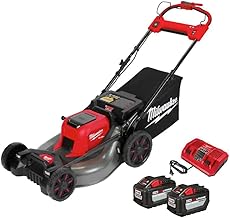
Before digging into the grass clippings, it helps to understand what you are getting straight out of the box. Milwaukee sells this mower as a kit with two 12.0Ah High Output batteries and a dual bay rapid charger. The deck is made from stamped steel, not plastic, which immediately sets a serious tone.
- Model: 2823-22HD (kit) or 2823-20 (bare tool)
- Cutting Deck: 21 inch stamped steel
- Voltage: 18V (36V equivalent using dual M18 batteries)
- Drive System: Rear wheel self-propelled with variable speed
- Cutting Height: 1.5 inches to 4 inches, single lever adjustment
- Modes: Mulch, rear bag, and side discharge
- Weight: Approximately 85 pounds with batteries
These numbers look competitive on paper, especially the 21 inch deck that matches most gas push mowers. The dual battery design is a unique approach that provides more total watt hours without forcing a massive 80V backpack. I will explain why that matters in the performance section.
Cutting Performance and Deck Design

A shiny red deck does not mean much if it leaves behind stragglers. I tested the mower on tall fescue that was over 4 inches high after a week of rain. The high lift blade combined with the steel deck created a strong vacuum effect that stood most turbo charged grass blades upright for a clean cut. The result was a remarkably even surface with no mohawk strips in the middle.
The stamped steel deck is heavier than plastic, but it resists flexing when you bump into roots or landscape edging. You do not get the cheap rattling sound common with budget battery mowers. In mulching mode, the clippings were fine enough that I never saw clumping, even in slightly damp conditions. That speaks to the blade tip speed Milwaukee engineers prioritized when killing the gas engine.
Side discharge worked adequately for overgrown areas, but the mulching capability is this mower’s strongest asset. If you are a homeowner who likes to mulch nutrients back into the lawn instead of bagging, you will appreciate how the dual blade setup processes material. Bagging is efficient too, with a full indicator that actually pops up when the bag is heavy, not just when a sensor feels like complaining.
Battery Life and Charging: Real World Runtime

Milwaukee includes two 12.0Ah High Output batteries in the kit. Because the mower runs both simultaneously in series, you get 36 volts of effective power and 216 watt hours of total energy. That is comparable to a 7.5Ah 60V battery, which is the sweet spot for most competitors. In my real world tests, I consistently cut between 8,000 and 9,500 square feet on a single charge using the self-propelled drive moderately.
I set the cutting height to 3 inches and used mulching mode for the runtime test. The mower automatically ramps up blade speed when it senses thicker grass, which drains the batteries faster. If you are cutting a lawn that is mostly thin bluegrass, you can probably stretch that number past 10,000 square feet. The dual bay rapid charger gets both 12.0Ah packs from empty to full in about 2 hours, which is faster than many 80V systems.
A practical tip: keep an extra pair of 8.0Ah or 6.0Ah batteries in the garage if your yard exceeds 0.25 acres. Swapping batteries takes 15 seconds, and you keep working without waiting. The mower will run on smaller packs, but the runtime drops proportionally, so I recommend sticking with at least 8.0Ah for each bay.
Self-Propelled Drive System
The rear wheel drive system uses independent motors in each wheel, which lets you control speed with a paddle on the handlebar. It is smooth and does not jerk you forward like some belt driven systems. You can dial the speed from a casual crawl up to a brisk walk without removing your hands from the operator presence control.
I found the drive system especially useful on slopes. The rear weight bias from the batteries sitting above the back wheels gives excellent traction, so the mower pulls itself up inclines without slipping. There is no front wheel drive option for those who prefer it, but after using both styles, I think the rear drive suits this heavy steel deck mower better.
Ease of Use and Storage
Folding the handle is a simple two lever operation, and the mower can stand vertically on its rear bumper for storage. That vertical storage feature saves serious floor space in crowded garages. Just make sure the battery bay caps are closed tightly so no dust enters the contacts while it rests against the wall.
The single lever height adjustment is stiff enough that it will not change accidentally but smooth enough that you can operate it with one hand. No tools required to switch between mulching, bagging, or side discharge. The grass bag has a rigid top and soft fabric body, making it easy to dump without a cloud of dust blowing back into your face.
How Does Milwaukee Compare to Gas Mowers?
Milwaukee Electric – M18 Fuel. 21 SELF-PROPELLED Dual Battery Mower KI
Check PriceIf you have been pushing a Honda or Toro gas mower for years, the biggest adjustment is not power, it is the absence of noise and fumes. The Milwaukee produces a satisfying electric whir that measures around 80 decibels at the operator’s ear, compared to 95 to 100 decibels for a typical gas engine. I can mow early on a Saturday without waking my neighbors, and my clothes do not smell like a gas station.
Power delivery is instant and consistent. A gas engine bogs down momentarily when you hit a dense patch, but the electronic controls in the Milwaukee sense the load and increase current to maintain blade speed. The cut quality in heavy grass rivals a 190cc gas mower, though a large commercial zero turn will still outpace it in wet, thick Bermuda. For residential lawns, the performance gap has vanished.
Milwaukee vs. EGO and Greenworks: Battery Mower Showdown
EGO LM2156SP vs. Milwaukee

EGO POWER+ Cordless Electric Lawn Mower, Self-Propelled, Includes 56V 7.5Ah Battery and Rapid Charger (LM2135SP)
Check PriceEGO uses a 56V Arc Lithium battery, and their top models deliver a slightly longer runtime per watt hour because of more efficient air flow. The EGO cuts very well and has a lighter plastic deck. However, the Milwaukee feels more robust over rocky terrain, and the steel deck gives me confidence that it will survive years of accidental impacts. If you already own EGO tools, stick with EGO. If you are in the Milwaukee M18 family, the mower integrates perfectly with your existing chargers and batteries.
Greenworks 80V vs. Milwaukee
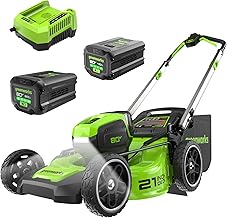
Greenworks 80V 21″ Brushless Cordless (Push) Lawn Mower (LED Headlight + Aluminum Handles), 4.0Ah + 2.0Ah Battery and Rapid Charger
Check PriceGreenworks 80V mowers have a higher nominal voltage, but the total watt hours determine real runtime. The dual 12.0Ah Milwaukee batteries provide 216 watt hours, while a single 4.0Ah Greenworks 80V gives 320 watt hours. I expected the Greenworks to outlast the Milwaukee decisively, but the Milwaukee’s efficient brushless motors closed the gap more than I anticipated. The Greenworks platform also has a huge array of tools, but the building quality of the Milwaukee deck and controls feels more refined.
For a deeper dive into which battery mower suits different yard sizes, check out our complete guide to the best Milwaukee lawn mowers. We compared each model in the lineup against similar priced competitors.
Who Should Buy the Milwaukee Lawn Mower?
This mower makes the most sense for homeowners who already own several M18 tools and have extra batteries on the shelf. The initial kit price feels steep, but if you can buy the bare tool and use your existing batteries, the cost of entry drops dramatically. Contractors who maintain small commercial properties also appreciate the quiet operation and lack of fuel maintenance.
I do not recommend this mower for someone with a yard bigger than 0.5 acres unless you are willing to buy a second set of 12.0Ah batteries. The runtime simply is not designed for large scale mowing. For those smaller urban or suburban lots, it is a perfect fit that eliminates oil changes, spark plugs, and air filter replacements forever.
Common Complaints and Issues
No product is flawless, and the Milwaukee lawn mower has a few recurring complaints worth addressing. The most frequent gripe involves the battery bay doors, which can feel flimsy if you try to force them open at an angle. I gently squeezed the release tabs and opened them straight up without problems, but I can see how rough handling might cause damage over time.
Some users report that the handlebar wobbles slightly where it meets the deck. I noticed a tiny amount of play after the first few uses, and I simply tightened the locking knobs an extra quarter turn. It never affected control. Another occasional issue is the self-propel paddle; it requires a firm grip to reach the top speed, which can cause hand fatigue for those with smaller hands.
If you encounter performance hiccups with other Milwaukee outdoor gear, our article on troubleshooting Milwaukee string trimmer issues shares tips that often apply to the mower’s battery communication protocol.
A trusted industry source, Pro Tool Reviews tested the M18 FUEL mower extensively and confirmed the cut quality rivals top tier gas mowers in thick grass. Their measured blade tip speed numbers align closely with my real world impressions.
Frequently Asked Questions
Milwaukee Electric – M18 Fuel. 21 SELF-PROPELLED Dual Battery Mower KI
Check PriceDoes the Milwaukee M18 lawn mower come with batteries and a charger?
Yes, the standard kit includes two M18 RedLithium High Output 12.0Ah batteries and a dual bay rapid charger. You can also purchase the bare tool separately if you already have compatible batteries.
Can I use smaller M18 batteries in the mower?
You can use any M18 battery, but the mower requires two batteries of equal charge to operate. A pair of 5.0Ah batteries will work, but the runtime will be less than half of the 12.0Ah pair. For best performance, stick with High Output 8.0Ah or 12.0Ah packs.
Is the Milwaukee lawn mower self-propelled?
Yes, the M18 FUEL mower features a variable speed rear wheel drive system that you control with a paddle on the handle. It pulls smoothly and helps on hills.
How long does the battery last on one charge?
With the included 12.0Ah batteries, you can expect to mow between 8,000 and 10,000 square feet depending on grass thickness, cutting height, and how often you use the self-propel.
Does it have a side discharge option?
Yes, the mower includes a side discharge chute in addition to mulching and rear bagging capabilities.
Final Verdict on the Milwaukee Lawn Mower Review
After weeks of pushing this through damp grass, dry dust, and a few stubborn patches of clover, I can confidently say Milwaukee did not simply slap a blade on a tool motor and call it a day. They engineered a serious lawn machine that rewards M18 platform loyalty. The steel deck, high lift blade, and intelligent load sensing motor combine to deliver a cut quality that feels authentically gas-like without the maintenance headache.
The cost of entry remains the biggest hurdle. If you are starting from zero, the kit price puts it in competition with premium EGO and Toro 60V mowers that also perform well. However, if your garage already glows red with M18 batteries and chargers, this mower is a no-brainer addition. It eliminates fuel storage, reduces noise, and integrates seamlessly with the system you trust.
Think about your yard size and your battery inventory before deciding. For the right user, the Milwaukee lawn mower delivers a dependable, quiet, and powerful cut that proves gas is no longer the default king of residential mowing.
