
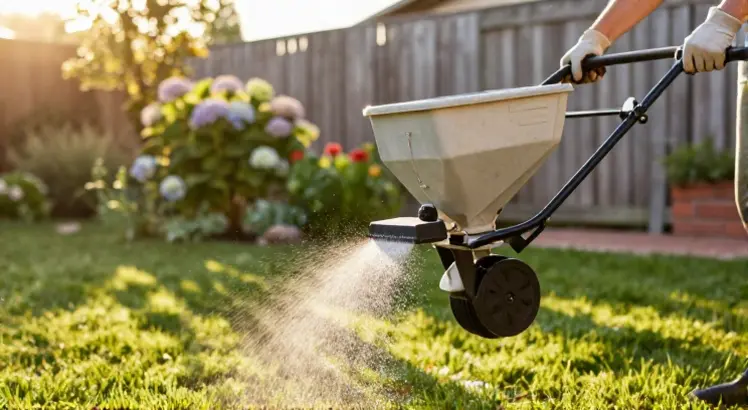
Learning how to use a lawn fertilizer spreader unlocks the secret to a thick, green lawn without the patchy stripes and wasted product. Many homeowners struggle with uneven feeding, but the process becomes simple once you understand your spreader type and proper technique. This guide walks you through every step, from calibration to cleanup, so you can achieve professional results even if you have never touched a spreader before.
Understanding Your Lawn Fertilizer Spreader

Scotts Turf Builder EdgeGuard DLX Broadcast Spreader
Check PriceBefore you open a bag of fertilizer, you need to know which type of spreader you own. The two main categories are drop spreaders and broadcast spreaders, and each one requires a slightly different approach. Handheld spreaders and liquid sprayers also exist, but granular push spreaders remain the most common tools for lawn fertilization.
Types of Fertilizer Spreaders
- Drop spreader: This tool releases granules straight down through a series of holes between the wheels. It provides precise application right where you walk, making it ideal near flower beds and driveways.
- Broadcast spreader: Also called a rotary spreader, this model flings granules outward in a wide fan pattern. It covers large areas quickly but requires more attention to overlap and drift.
- Handheld spreader: A small, crank-operated bucket works for tiny lawns or spot treatments. It uses a broadcast mechanism in a lightweight, affordable design.
Drop spreaders reward careful alignment and slow walking, while broadcast spreaders demand consistent pacing and a feel for the throwing arc. If you are still shopping for a unit, our review of the best fertilizer spreader for your lawn can help you pick the right tool. Once you understand the differences, you can adapt the following steps to your model.
How to Prepare Your Spreader for Use

Amazon Basics Fertilizer Spreader
Check PriceCalibrating Your Spreader
Calibration makes sure you apply the correct amount of product per square foot. Skipping this step often leads to burned stripes or thin, underfed patches. Start by checking the fertilizer bag for the recommended spreader setting, then test on a small known area.
Measure a 10-by-10-foot square, weigh a small amount of fertilizer, and fill the hopper with it. Walk the square at your normal pace and collect any remaining granules. Weigh what is left, subtract from the original amount, and compare the result to the bag’s rate. Adjust the gate opening up or down until you hit the target. For precise calculations without guesswork, you can follow Penn State Extension’s calibration instructions.
Choosing the Right Fertilizer
Granule size and density affect how the spreader throws the material. Fine, dusty products settle quickly and can clog a drop spreader, while large, coated prills fly farther from a broadcast unit. Always match the fertilizer formulation to your spreader type and follow the label settings as a starting point. Organic fertilizers often have irregular particles, so you may need to increase the gate opening slightly and walk slower to maintain the right rate.
Step-by-Step Guide to Using a Fertilizer Spreader

VEVOR Broadcast Spreader 50LBS
Check PriceFilling the Hopper Safely
Always fill the spreader on a hard surface, not on the lawn. Spills on the driveway or sidewalk are easy to sweep up, while a pile of fertilizer on the grass will create an ugly brown spot within days. Use a scoop or cup to pour granules into the hopper, stopping about an inch below the rim to prevent sloshing and uneven flow.
Close the gate completely before filling. If the lever is open, fertilizer will pour straight through and create a concentrated pile. Double-check the on/off mechanism and make sure the opening slides shut smoothly every time you stop moving.
Setting the Rate
Refer to the fertilizer bag for the manufacturer’s suggested spreader setting. Every spreader model uses a different scale, so the number on a Scotts bag may not translate directly to an Earthway spreader. Use the calibration results you collected earlier to fine-tune the dial. If you do not have a number, start at a medium-low setting and test on a small patch before committing to the whole yard.
Walking the Pattern
Begin by applying a header strip around the perimeter of the lawn, two passes wide. This edge row acts as a turning area and catches any overshoot from a broadcast spreader so you do not fling granules into flower beds. For a drop spreader, the header strip gives you room to turn without missing spots near the border.
Next, walk back and forth in straight parallel lines. With a broadcast spreader, the spread pattern extends several feet to each side, so you must overlap each pass by about one-third. If you walk too closely spaced, you will double-dose the middle and create dark green stripes. With a drop spreader, line up the wheels directly over the previous pass’s wheel marks to eliminate gaps.
Keep the spreader moving before you open the gate. Start walking a step or two early, flip the lever to release product, and close it one step before you stop. This prevents piles at the start and end of every row.
Overlap Technique for Broadcast Spreaders
Visualize the spreader throwing granules in a semi-circle forward and to the sides. The effective width of that arc is printed in the manual. Mark that width, then plan your next pass so the edge of the throw lands in the middle of the previous wheel track. The goal is to let the faint spray of granules from the left side of one pass blend evenly with the right side of the next pass. If you see a thin line of extra-dark grass after a few days, tighten your spacing next time.
Tips to Avoid Common Spreading Mistakes
- Walk at a steady, moderate pace. Rushing throws the rate off and causes uneven coverage.
- Shut the gate at every turn and when you pause to check your phone or chat with a neighbor.
- Never spread on windy days, especially with a broadcast spreader. Wind carries light granules into beds and hardscapes.
- Apply two half-rate passes in perpendicular directions instead of one heavy application. This crisscross method minimizes stripes and fills in skips.
- Keep a leaf blower or broom handy to sweep stray granules off hard surfaces immediately.
These habits apply whether you are working with synthetic granular fertilizer or organic meals. The same technique also works well if you are spreading grass seed. For a deeper dive into that process, read our guide on how to spread grass seed evenly.
Cleaning and Maintenance

Chapin 25lb Handheld Seed Spreader
Check PriceFertilizer residue attracts moisture and corrodes metal parts. After every use, empty any leftover granules back into the bag and seal it tightly. Use a soft brush or compressed air to remove dust from the hopper, gate, and impeller. Pay special attention to the axle and wheels, where granules can get trapped and cause rust.
Rinse the spreader with a garden hose if the manual allows it, then dry it completely with a towel or by leaving it in the sun. Lubricate moving parts, including the gate linkage and wheel bearings, with a silicone spray or light oil. Store the spreader indoors or under a waterproof cover. A little maintenance at the end of the season will keep the settings accurate and the mechanism smooth for years.
Frequently Asked Questions

VEVOR Compost Spreader
Check PriceCan I use the same spreader for fertilizer and grass seed?
Yes, most broadcast and drop spreaders handle both. You will need to adjust the gate opening to match the size of the seed or granule. Clean the spreader thoroughly between products so leftover fertilizer does not burn young seedlings.
What setting should I use if my spreader is not listed on the bag?
Begin with a setting that opens the gate one-third of the way and perform a calibration test on a tarp or small measured area. Many manufacturers publish conversion charts online, so check the spreader brand’s website for a starting number.
How do I fix dark green stripes after fertilizing?
Dark stripes mean you overlapped too much or shut the gate late at the end of rows. The grass will outgrow the excess nitrogen in a few weeks. Next time, widen your passes slightly and practice the start-walk-open and close-stop-walk rhythm.
Should I water after spreading fertilizer?
Most granular fertilizers need water to move nutrients into the soil. Lightly irrigate with about a quarter inch of water after application unless the product label says otherwise. Avoid heavy watering that could wash granules into storm drains.
How often should I calibrate my spreader?
Calibrate at the start of each season and whenever you switch to a new fertilizer type. Wear on the gate and impeller changes the output over time, so a quick check keeps your application rate accurate.
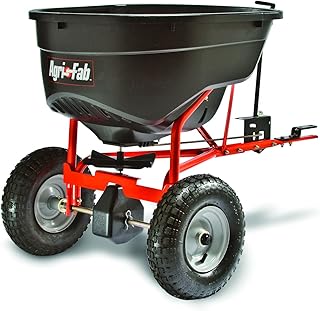
Agri-Fab Pull Behind Broadcast Spreader
Check PriceConclusion
Using a lawn fertilizer spreader correctly transforms a chore into a satisfying routine that rewards you with a carpet of healthy grass. The keys are matching your walking speed to the spreader, calibrating the gate for your specific product, and overlapping with intention. When you combine these steps with thorough cleaning and a crisscross application pattern, you eliminate the guesswork and the stripes.
Start with a small, manageable section of your yard and treat the first application as a practice round. Observe how the granules land, note where you turned too soon or too late, and adjust on the next mowing cycle. With a little patience, you will develop the muscle memory that turns you into the most precise spreader operator on the block.
