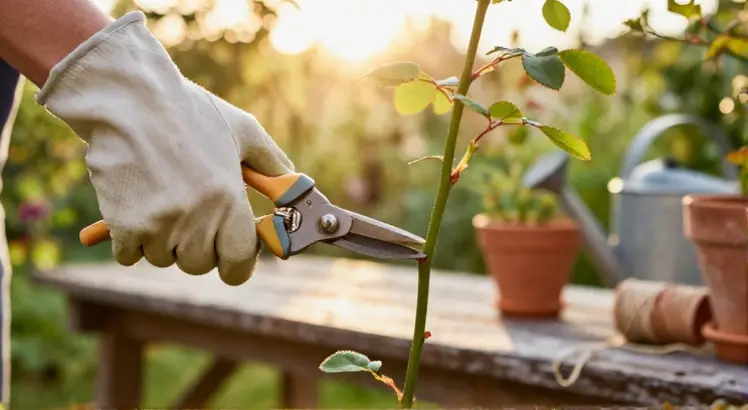
Mastering how to use pruning shears is the single most impactful skill you can develop for the health and appearance of your garden. You might think it is just about snipping away dead branches, but there is an art and science behind every cut. Incorrect pruning not only damages your roses and shrubs, it leaves them open to disease decay and structural weakness. This guide takes you beyond the basics, ensuring you wield those blades with confidence and precision.
We will walk through the anatomy of the tool, the critical differences between blade types, and the professional techniques that promote rapid plant healing. Whether you are deadheading flowers or trimming fruit trees, understanding the mechanics of a clean cut will transform your yard work from a chore into a joyful nurturing act. Let’s get your hands positioned correctly and your shears ready for action.
Understanding Your Tool: Bypass vs. Anvil Shears
Before we dive into technique, you need to identify exactly what you are holding. The way you use your tool changes entirely depending on whether you are holding a bypass pruner or an anvil pruner. Using the wrong cutting action for your blade type will crush stems and leave ragged cuts.
The Bypass Mechanism
Bypass shears work like scissors. They have a sharp, curved blade that sweeps past a thicker, unsharpened jaw. This design is for cutting live, green wood. The shearing action is delicate and precise, allowing you to get very close to the bud without damaging the surrounding tissue.
To properly use a bypass pruner, you must always orient the sharp blade toward the main plant body that will remain. The dull counter-blade crushes the small piece of waste stem you are removing, while the sharp blade slices cleanly into the part of the plant staying in your garden. This minimizes bruising and allows the plant to seal the wound quickly.
The Anvil Mechanism
An anvil pruner features a single straight sharpened blade that closes down flat against a soft metal or plastic block, similar to a knife on a chopping board. This is a crushing mechanism, not a shearing one. It requires more hand strength to push the blade through.
You should reserve anvil shears strictly for dead wood. Live stems are soft and spongy, and an anvil blade will often flatten the stem instead of cutting it, leaving a crushed pulp that invites pests. Using an anvil to cut live plants is the most common mistake beginners make. If you are working on living bushes, you need to learn how to use bypass pruning shears specifically.
How to Use Pruning Shears With Proper Grip and Posture
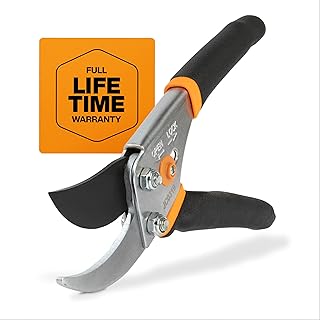
Fiskars Bypass Pruning Shears, 5/8″ Cut Capacity Gardening Scissors
Check PriceYour hands are your most valuable garden tools, and keeping them safe starts with a correct ergonomic hold. Carpal tunnel and wrist strain are common among gardeners who grip their shears incorrectly. Always use the five-finger grip, with all fingers wrapped around the handle, rather than holding the tool with just your thumb and forefinger.
Keep your wrist straight and aligned with your forearm. You should lock your wrist and make the cutting motion by opening and closing your palm. Never twist your wrist at an awkward angle to reach a deep branch, as this puts immense lateral pressure on your tendons. If you feel pinching inside your palm, your grip is too tight.
Grip the branch you are removing with your free hand to steady it. This prevents the plant from pulling or tearing as the blade closes. This technique, called the two-hand steady, ensures the razor-sharp blade does not slide sideways and strip bark off the main trunk. Safety glasses are also essential, as springy branches can flick back toward your eyes. For precision work, choose sharp garden scissors designed for detailed trimming.
Mastering the Fundamental Cutting Angle
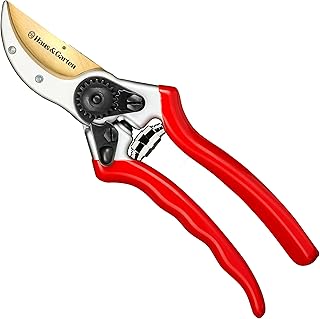
Haus & Garten ClassicPRO 8.5″ Professional Premium Titanium Bypass Pruning Shears
Check PriceThe direction and slope of your cut directly influence how a plant heals. Never cut flat across a stem. Water pools on flat cuts, leading to fungal growth and slow sealing. The correct angle is a sharp 45-degree slant.
Location of the Bud Node
The golden rule of pruning is to cut about a quarter of an inch above a bud node. The bud node is the small bump where a leaf meets the stem. If you cut too far away from the node, you leave a long stub called an internode, which the plant cannot heal, and it will die back, often turning black.
Positioning the 45-degree cut is critical. The high side of the angled cut must be right at the tip of the bud, and the low side should slope down to the opposite side of the stem. This directs rainwater away from the developing bud. If the slope runs toward the bud, water will drip directly onto the new growth, causing damping off or fungal issues.
Directional Pruning
You can literally steer the future growth of your shrub by choosing which bud you leave behind. The topmost remaining bud will become the new dominant branch. If you cut above an outward-facing bud, the plant will grow wide and airy, improving air circulation. If you cut above an inward-facing bud, the plant will cross-branch and become tangled.
Look at the plant’s architecture before snipping. Visualize the direction you want the stem to grow. This is how professionals shape elegant, vase-like roses rather than messy, congested bushes.
Step-by-Step: How to Use Pruning Shears for Live Stems
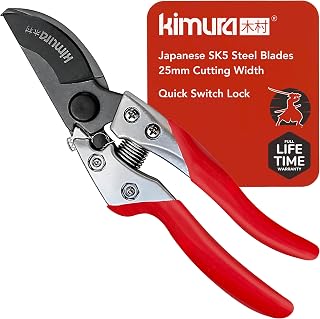
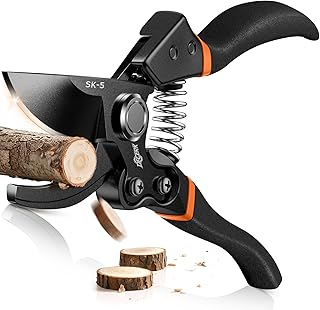
Kimura® 8″ Pro Bypass Pruning Shears, Heavy Duty Japanese SK5 Steel Blades
Check PriceLet’s put the mechanics into a systematic process. If you follow this sequence every time, you will eliminate mistakes and your plants will bounce back faster after a trim. It is a pattern used by master gardeners globally.
- Sanitize the Blades: Wipe them down with isopropyl alcohol. This is the only way to ensure you are not transferring rust, fungus, or bacteria from a previously infected plant into a fresh open wound.
- Position Deep in the Jaw: Slide the branch as deep into the opening as possible. Using just the tip of the blade is a rookie error that forces you to squeeze much harder, jarring the plant tissue. The back of the jaws offers maximum leverage.
- Align the Blade to the Trunk: Remember, the cutting blade touches the keeper part of the plant. The counter-blade crushes the off-cut.
- Squeeze in One Fluid Motion: Hesitation leads to tearing. Make it a swift, confident clip. A fast cut results in a surgical smooth surface rather than a ragged edge.
- Close Completely: Do not stop short and snap the last bit of bark off with your fingers. This strips the bark down into the healthy portion of the stem.
How to Cut Thick Branches Safely
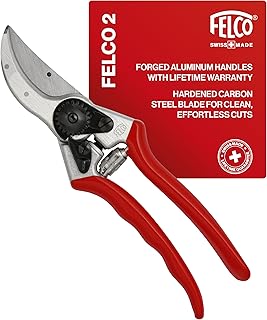
Felco F2 Pruning Shears – 9.25″ Swiss-Made Garden Clippers
Check PriceEvery pair of shears has a maximum cutting capacity, usually listed in the product manual. For standard bypass pruners, this is often around three-quarters of an inch. Trying to cut a branch that is too thick is the fastest way to break your tool and injure your wrist.
If you encounter a branch that offers resistance and your shears stop halfway, do not twist the handles. Twisting bends the main pivot screw, creating a permanent gap between the blades. Once this gap exists, the shears will fold soft stems instead of cutting them. Instead, back the shears out and switch to loppers.
When you need to cut thicker growth quickly, you might reach for heavy-duty gears equipped with compound action. These mechanisms amplify your power by several times, letting you cut hard wood with very little strain. A ratcheting mechanism also helps, as it clicks into place, allowing you to apply pressure in stages without twisting.
Cleaning and Sharpening: The Foundation of a Clean Cut
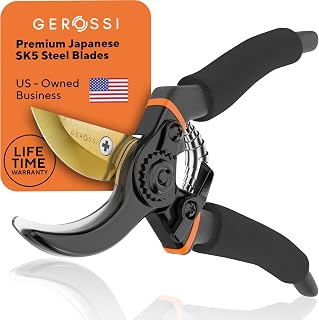
Premium Bypass Pruning Shears for your Garden
Check PriceA sharp tool is not just a luxury of ease, it is a biological necessity for your plants. Dull shears work by crushing the capillary tubes within the stem, effectively strangling the branch tip. A properly sharpened blade severs these tubes cleanly, allowing water and nutrients to still flow into the healing bud.
You must clean your shears after every gardening session. Sap is sticky and corrosive. If left to harden, it creates a gummy residue that causes blades to stick and rust to form. Use a scouring pad with warm soapy water to remove resin. For pine or evergreen sap, rubbing alcohol cuts through the pitch instantly.
Sharpening is often intimidating, but keeping the factory bevel is simpler than you think. Regularly maintaining your tools by removing nicks and burrs prolongs their life. To restore a dangerously dull edge, you should learn the specific technique for how to sharpen pruning shears without damaging the hardened steel. Focus only on the outside bevel and never file the flat back side of a bypass blade.
Common Mistakes to Avoid When Using Shears
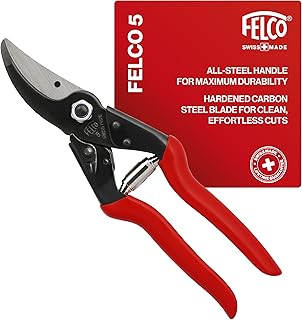
Felco F5 Pruning Shears – 8.9″ All Steel Large Swiss-Made Garden Clippers
Check PriceEven gardeners with years of experience can fall into lazy habits that sabotage the garden’s vitality. The first major mistake is topping, where you cut all branches down to a uniform height without regard for node placement. This results in a dense, shell-like outer layer that blocks light from the interior of the plant.
Ignoring the weather forecast is another pitfall. Never prune a plant when heavy rain is imminent. Open wounds absorb excess moisture, creating an internal environment ripe for mildew. The ideal time to prune is a sunny, dry morning, giving the cut all day to dry and callus over before the cool, damp evening arrives.
Many people also overlook personal protective equipment. Even a small slip with high-quality pruning shears can cause a deep wound. Always wear cut-resistant gloves and ensure your free hand is positioned far back on the branch. This is a fundamental safety protocol referenced by professional arborists and the workplace safety guidelines for landscaping.
Frequently Asked Questions
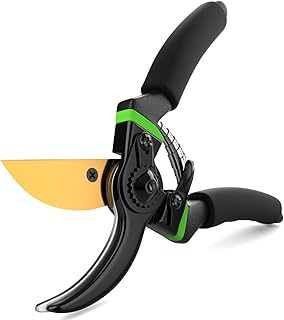
Ultra Sharp Japanese Steel Pruning Shears
Check PriceWhy are my pruning shears tearing instead of cutting?
Tearing usually means the branch is too thick for the shears, or the pivot screw has worn loose. If you have a gap between the blades, they will fold the fiber rather than slice it. Tighten the pivot bolt just until the blades make full contact again, and always place the branch at the base of the jaws for maximum power.
Can I use wd-40 to lubricate garden shears?
It is best to use a plant-safe lubricant. While WD-40 is a great solvent for cleaning gunk and freeing rust, it is a petroleum-based product. You should wipe it off completely before cutting, as its residue can potentially harm sensitive plant tissues. A better choice is camellia seed oil or a food-grade silicone spray for daily lubrication.
How do I prevent my hand from hurting after pruning?
Hand fatigue comes from over-gripping and cutting with the wrist bent. Use ergonomic shears with rotating handles to distribute pressure across your whole hand. If you are doing a big job, switch to pruners designed for smaller hands or ratcheting models that build tension in a few clicks, reducing your muscle effort by half.
Conclusion: Practice Makes Permanent
Learning how to use pruning shears properly is an investment in the longevity of your garden. The difference between a struggling shrub and a vibrant one often comes down to the angle of a single cut and the sharpness of the blade. By holding the tool correctly, respecting the difference between bypass and anvil actions, and always cutting at a 45-degree angle right above an outward-facing node, you set your plants up for explosive, healthy growth.
Before you put your tools away today, give them a quick wipe down and store them in a dry spot. The next time you walk out to deadhead a few flowers, you will feel the immediate improvement in your technique. Your garden will thank you with more blooms and less disease, a direct result of the excellent care you are now equipped to provide.
