
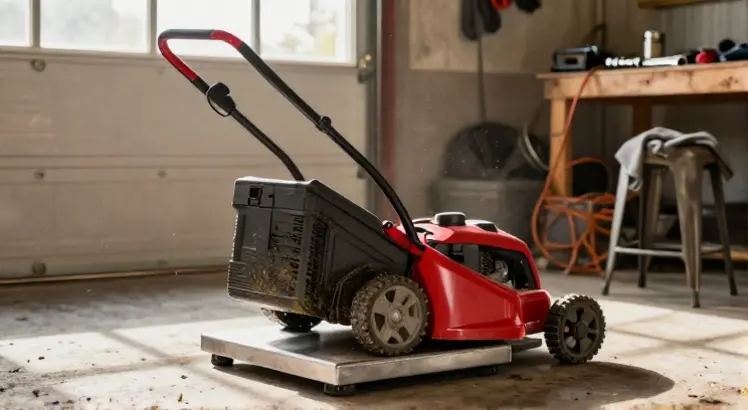
If you have ever struggled to push a heavy machine up a ramp or tried to lift one into your truck, you have probably wondered, how much does a lawn mower weight. The answer is not a single number. A lightweight manual reel mower can weigh under 20 pounds, while a large zero-turn riding mower can tip the scales at over 1,000 pounds. Understanding these weight differences helps you pick a mower you can handle safely, store easily, and maintain without strain.
In this guide, I will walk you through average lawn mower weights for every common type. You will learn which factors add extra pounds, why weight matters for your lawn’s health, and how to manage a heavy machine without hurting yourself. I have spent years testing and reviewing outdoor power equipment, and I have moved plenty of mowers in and out of sheds, knowing exactly how much that weight matters in real life.

Why Lawn Mower Weight Matters
Weight influences everything from usability to storage. A mower that is too heavy for you can turn a simple Saturday chore into a frustrating workout. Conversely, a machine that is too light might bounce on uneven ground and leave an uneven cut.
Here are the key areas where weight plays a major role:
- Maneuverability: Lighter mowers are easier to turn around flower beds and trees, but they may lose traction on slopes.
- Transport and storage: If you need to lift your mower onto a truck bed or carry it down basement stairs, every pound counts.
- Cut quality: Heavier steel decks often vibrate less and hug the ground more consistently than lighter plastic decks.
- Safety: A heavy riding mower on a steep hill can be dangerous if you lose control, while a very light push mower might pull you downhill.
When you ask how much does a lawn mower weight, you are really asking whether you can operate it comfortably day after day. The right weight balances stability with ease of use.
Average Lawn Mower Weights by Type

WORX Nitro WG752 21-Inch Brushless Push Mower
Check PriceDifferent mower categories have distinct weight ranges because of their deck materials, engine size, and features. Below is a breakdown of the most common types, drawn from manufacturer specs and verified through hands-on experience.
Push Mowers (Gas and Corded Electric)
A standard walk-behind push mower with a gas engine typically weighs between 35 and 70 pounds. Small 20-inch models with plastic decks sit at the lower end, while 22-inch steel deck mowers with larger engines push closer to 70 pounds. Corded electric push mowers are usually lighter, ranging from 25 to 45 pounds, because they lack a heavy engine block and fuel tank.
If you want to know how much does a lawn mower weight for a typical gas push model, 55 pounds is a solid average. This is light enough for most adults to pivot around obstacles but heavy enough to stay planted on gentle slopes. For truly ultra-light options, best lightweight push mowers for compact lawns often weigh under 40 pounds and feature compact decks.
Self-Propelled Mowers
Self-propelled mowers add a drive system, so they are heavier than push models. Front-wheel-drive variants usually range from 65 to 95 pounds. Rear-wheel-drive and all-wheel-drive mowers can go from 75 to over 110 pounds. The transmission, larger rear wheels, and stronger frames contribute the extra weight.
Despite the higher number on the scale, self-propelled mowers can feel easier to use because the drive system does the pushing for you. However, you still need to lift the mower occasionally, for example, to load it for transport, and that is when the weight difference becomes noticeable.
Riding Mowers and Lawn Tractors
Riding mowers jump dramatically in weight. Entry-level lawn tractors with 42-inch decks start around 400 pounds without fuel. Mid-size garden tractors typically weigh between 500 and 650 pounds. Larger machines with wider decks and more powerful engines can easily exceed 800 pounds.
The frame, transaxle, mower deck, and engine all contribute to the heft. When you ask how much does a lawn mower weight in the riding category, always check the dry weight versus operating weight with fuel. A full six-gallon tank can add close to 40 pounds.
Zero-Turn Mowers
Zero-turn mowers are the heavyweights of residential lawn care. Even smaller residential zero-turns with 42-inch decks often weigh between 550 and 750 pounds. Commercial-grade models with 60-inch or larger decks can weigh 1,000 to 1,500 pounds or more, depending on the engine and frame reinforcement.
The weight of a zero-turn is an asset for stability at high speeds and on uneven terrain. However, it makes them difficult to trailer without proper ramps and tie-downs. Always confirm the total weight before you attempt to transport one.
Battery-Powered Cordless Mowers
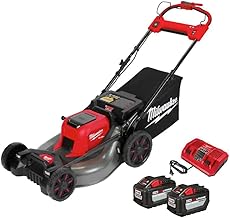
Milwaukee Electric – M18 Fuel. 21 SELF-PROPELLED Dual Battery Mower KI
Check PriceCordless battery mowers vary widely. Compact 14-inch models can weigh as little as 30 pounds with the battery installed. Full-size 21-inch mowers with dual battery slots and steel decks frequently weigh between 60 and 90 pounds. The battery packs themselves add between 5 and 12 pounds each, so a dual-battery mower can feel heavy when you lift it onto a hook for wall storage.
Despite the weight, many cordless mowers have a vertical storage feature, which helps you save floor space. If you plan to hang your mower, make sure the wall mount and your grip can handle the total weight.
Manual Reel Mowers
Manual reel mowers are the lightest option by far. A basic 16-inch reel mower often weighs between 15 and 25 pounds. Even larger 20-inch models with grass catchers rarely exceed 35 pounds. This makes them ideal if you need to carry the mower up steps or if storage space is extremely tight.
The ultra-light weight also means reel mowers require more frequent passes to cut cleanly, and they can skip if you hit a thick patch of grass. Still, for small, flat lawns, the weight advantage is hard to beat.
Factors That Affect a Lawn Mower’s Weight

Greenworks 40V 16-Inch Cordless Push Mower
Check PriceOnce you understand the broad ranges, you can dig into the specific components that tip the scale. Knowing these details helps you predict how much does a lawn mower weight before you even look at the spec sheet.
- Deck material: Steel decks are durable and heavy, while aluminum decks reduce weight by 5 to 10 pounds without losing strength. Plastic and composite decks are the lightest but may flex on rough terrain.
- Engine size: A 140cc engine is noticeably lighter than a 190cc or 223cc engine. In battery mowers, a 40V system with two 5Ah batteries weighs more than a single-battery 18V system.
- Cutting width: Wider decks need more material, which adds pounds. A 21-inch mower typically weighs 10 to 20 percent more than a 18-inch version of the same model line.
- Drive system: Self-propelled transmissions, differentials, and larger rear wheels all pile on weight.
- Fuel and fluids: Dry weight does not include gasoline or oil. Always add roughly 6 pounds per gallon of fuel and a couple of pounds for oil when estimating the real lifting weight.
- Accessories: Mulching kits, baggers, and tow-behind carts can add 15 to 50 pounds when attached.
A reliable gardening resource on equipment weights often reinforces why those small component differences matter. Two mowers that look identical can have a 15-pound difference just based on the deck gauge and handle material.
Tips for Handling Heavy Lawn Mowers

KOMASTY 40V 16-Inch 2-in-1 Cordless Mower
Check PriceIf your mower feels like too much to handle, you do not need to trade it in immediately. Small adjustments to your technique and setup can make a big difference.
- Use ramps, not your back: When loading a riding mower or a heavy walk-behind into a truck or shed, invest in a pair of arched loading ramps. Pushing a 500-pound mower up a ramp is far safer than deadlifting even half that weight.
- Employ the drive system: On self-propelled models, engage the drive when moving the mower up an incline. The transmission can do most of the work, reducing the strain on your arms and shoulders.
- Remove batteries before lifting: On cordless mowers, pop out the batteries to shed 5 to 12 pounds instantly. The mower body becomes much more manageable for wall mounting or carrying.
- Keep the deck clean: A deck packed with dried grass clippings can trap several pounds of extra weight. Scrape the deck regularly to keep the mower as light as intended.
- Choose the right mower for your terrain: If you have steep hills, do not immediately grab the heaviest mower. A lighter self-propelled model with good traction can climb without the extra overall mass that makes downhill control tricky.
For more guidance on picking a machine that fits your strength and yard conditions, explore our comprehensive guide on selecting the right lawn mower. It walks through deck size, power source, and yes, weight considerations in detail.
Frequently Asked Questions

LawnMaster CLMF4819X 19-Inch Brushless Mower
Check PriceHow much does a lawn mower weight for a typical residential push model?
Most residential gas push mowers weigh between 40 and 65 pounds. Electric push mowers are often lighter, ranging from 25 to 45 pounds. The exact number depends on deck material and cutting width.
Does a heavier mower cut grass better?
Not necessarily. Heavier mowers tend to vibrate less and follow ground contours more consistently, which can improve cut quality on bumpy lawns. However, a well-designed lightweight mower with sharp blades can deliver an excellent cut on smooth, even turf.
How can I find the exact weight of my mower?
Check the owner’s manual or the manufacturer’s specification sheet. Look for dry weight or unit weight and then add fuel if the mower is gas-powered. If you no longer have the manual, a bathroom scale can work for walk-behind mowers: simply lift and weigh each end separately, then add the numbers.
Why are zero-turn mowers so heavy?
Zero-turn mowers have heavy-duty frames, larger engines, and hydraulic drive systems that contribute significant mass. The weight provides needed traction and stability when operating at higher speeds and on slopes.
Can a light person handle a heavy self-propelled mower?
Yes, because the self-propel feature does the pushing. The main challenge arises when you need to lift the mower to turn it or load it. In those moments, the weight is fully on you. Consider a model with a vertical storage design and a lower overall weight if you expect to lift it frequently.
Conclusion
Knowing how much does a lawn mower weight gives you the power to choose a machine that fits your body, your storage situation, and your lawn. A lightweight reel mower may be perfect for a tiny city yard, while a sturdy zero-turn is a must for multi-acre properties. Always check the detailed specs, factor in fuel and batteries, and think about how you will move the mower when it is not cutting grass.
If you balance weight against features like cutting width and drive type, you will end up with a mower that feels effortless rather than overwhelming. For an even deeper look at all the features that matter, visit our dedicated lawn mower selection advice. A few extra minutes of research now can save you years of back strain later.
