
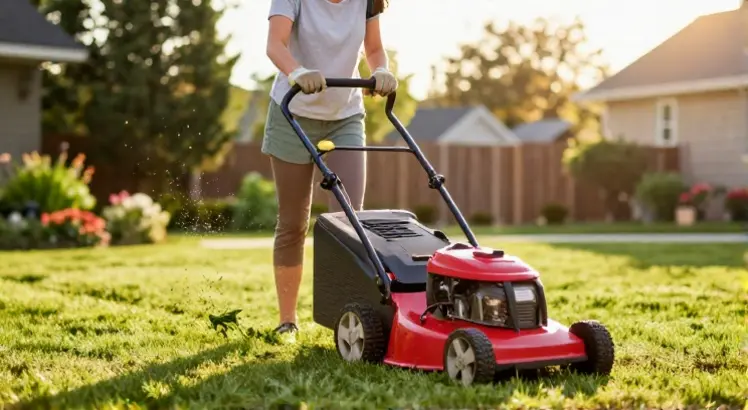
Learning how to use lawn mower might seem straightforward, but doing it correctly makes a huge difference in the health of your grass and your personal safety. Whether you just bought your first machine or you simply want to sharpen your skills, this guide will walk you through every step. You will discover how to prepare your yard, start different types of mowers, and master the mowing techniques that professional landscapers use.
Many homeowners jump straight into cutting without a plan, which often leads to scalped lawns, clogged decks, or even nasty accidents. Taking a few minutes to understand the fundamentals will pay off all season long. You will get a cleaner cut, reduce the risk of breakdowns, and enjoy a lush, green carpet outside your home.

Greenworks 60V 21in Brushless Self-Propelled Cordless Lawn Mower, 2 x 4.0Ah Batteries (3/4 Acre, Rapid Charger
Check PriceUnderstanding Your Lawn Mower Types
Before you pull the starter cord or push a button, you need to know what kind of machine you are dealing with. The operating procedure varies slightly between gas, electric, and manual reel mowers. Getting familiar with your specific model is the first step in mastering how to use lawn mower.
Gas-Powered Walk-Behind Mowers
These are the most common traditional mowers, known for their raw power and unlimited runtime. They require fuel, oil, and regular maintenance to stay reliable. You will typically find a primer bulb or a choke lever, and a pull cord to fire up the engine.
Electric and Battery-Powered Mowers
Electric mowers are popular because they are quiet, lightweight, and require almost zero maintenance. Corded models restrict your range, while battery-powered mowers offer freedom and are just as easy to start. The activation usually involves a safety key and a push-button start or a bail lever squeeze.
Self-Propelled vs. Push Mowers

Greenworks 40V 16″ Cordless Lawn Mower, Lightweight Electric Push Mower with 4.0Ah Battery & Charger
Check PriceSelf-propelled mowers have a drive system that moves the wheels forward, so you just guide the machine. This is a lifesaver on slopes or larger yards. A standard push mower relies entirely on your muscle, which gives you more control in tight spaces but requires more effort.
Greenworks 60V 21in Brushless Self-Propelled Cordless Lawn Mower, 2 x 4.0Ah Batteries (3/4 Acre, Rapid Charger
Check PriceManual Reel Mowers

Reel mowers are the eco-friendly, silent option. They cut grass with a scissor-like action as you push. They work best on flat, small lawns with fine grass types. Using one requires a brisk walking pace, but it is the healthiest way to cut your grass.
Safety First: Pre-Mowing Checklist
Safety is not just a suggestion, it is a requirement. Even experienced users can get hurt if they skip the basics. Before you learn how to use a lawn mower, you must learn how to prepare the area and yourself.
Dress for the Job
- Always wear sturdy, closed-toe shoes with good grip. Never mow in sandals or barefoot.
- Long pants protect your legs from flying debris like rocks or sticks.
- Safety glasses or sunglasses shield your eyes from dust and projectiles.
- Hearing protection is a must for gas mowers, as prolonged exposure can damage your hearing.
Clear the Lawn of Debris
Walk the entire area and pick up any sticks, stones, pine cones, or children’s toys. A mower blade can turn a small rock into a dangerous missile. This simple habit also prevents damage to your blade and protects your home’s windows from flying objects.
Inspect the Mower Itself
Check the oil level if you have a gas engine. Look for fuel leaks, loose cables, or damaged electrical cords. Make sure the blade is sharp and the bolts are tight. A dull blade tears the grass rather than cutting it, leaving your lawn looking ragged and prone to disease.
If you notice the blade is struggling, you can learn how to sharpen your mower blades to restore that clean, surgical cut. A sharp blade reduces the strain on your engine and delivers a much healthier lawn.
How to Start a Lawn Mower
The starting sequence depends on the power source. Rushing this process can flood the engine or drain your battery. Follow the correct steps for your machine to avoid frustration and unnecessary repairs.
Starting a Gas Mower
First, make sure the fuel valve is open and there is fresh gas in the tank. Stale fuel is a common reason for hard starts. Move the throttle to the choke position if the engine is cold. Press the primer bulb 3 to 5 times to inject a burst of fuel into the carburetor.
Stand firmly behind the mower, hold the safety bail handle against the upper bar, and pull the starter cord with a quick, smooth motion. Once the engine catches, slowly move the throttle from choke to the run setting. If it sputters, give it a little more time to warm up.
Starting an Electric or Battery Mower
Insert the fully charged battery pack or plug in the extension cord, ensuring the cord is looped under the handle to prevent accidental disconnection. Most models require you to insert a safety key. Then, press and hold the start button while pulling the bail lever toward the handle. Release the button once the motor hums to life, and you are ready to go.
Mowing Techniques for a Healthy Lawn
Knowing how to use a lawn mower is about more than just turning it on. Your technique directly impacts the density, color, and weed resistance of your turf. These best practices will turn your yard into the envy of the neighborhood.
The One-Third Rule
Never cut off more than one-third of the grass blade height in a single mowing session. Cutting too short scalps the lawn, exposing the crown to sun scorch and weed invasion. If your grass has grown too tall, raise the deck height and mow it twice, a few days apart, to reach the desired height.
Adjust Your Cutting Height
Cool-season grasses like Kentucky bluegrass thrive when cut to about 2.5 to 3.5 inches. Warm-season grasses such as Bermuda prefer a shorter cut, around 1 to 2 inches. Always adjust the mower deck on a flat surface, and check the tire pressure on riding mowers, as low tires can create an uneven cut.
Mowing Patterns and Overlap
Start by mowing a border strip around the perimeter of the yard. This gives you a clean edge and a space to turn around. Then, mow in straight, parallel lines overlapping each pass by about 2 to 3 inches. This overlap prevents missed strips of grass and eliminates the need for a second cleanup pass.
Change Direction Every Time
Altering your mowing pattern each week, switching from horizontal to diagonal to vertical, prevents the grass from leaning in one direction. It also reduces soil compaction and wheel ruts. A lawn that stands up straight catches the sunlight better and looks more uniform.
Dealing with Slopes and Wet Grass
On slopes, always mow across the hill with a walk-behind mower, never up and down. This prevents you from slipping and the mower from rolling back onto your feet. If you are using a riding mower, the rule reverses: mow up and down the slope to avoid tipping over sideways.
Mowing wet grass is generally not recommended because it clumps, clogs the deck, and causes uneven cuts. However, if you absolutely must mow after a rain, you can discover tips for cutting wet grass without damaging your lawn. The key is to raise the deck, slow your pace, and clean the undercarriage frequently.
Taking Care of Your Lawn Mower After Use
Proper post-mow care is what separates a mower that lasts five years from one that lasts twenty. Ending your session with a few simple maintenance steps keeps your machine reliable and safe for the next cut.
Cleaning the Deck
Grass clippings packed under the deck block airflow, reducing suction and cut quality. Disconnect the spark plug wire on a gas mower or remove the battery on an electric model before cleaning. Scrape out the deck with a plastic putty knife or a stick, then rinse gently with a hose. Avoid spraying water directly into the air intake or electrical components.
Fuel and Battery Storage
For gas mowers, add a fuel stabilizer if you plan to store the unit for more than 30 days. Run the engine dry, or drain the carburetor to prevent varnish buildup. For battery mowers, store the battery indoors at room temperature, and never leave it on the charger indefinitely. A partial charge of around 50 percent is ideal for long-term storage.
Blade and Air Filter Maintenance
At the end of the season, remove the blade and sharpen it, or replace it if it is deeply damaged. Check the air filter and clean or replace it so the engine breathes freely. These small tasks ensure that the next time you go to start the mower, it fires up on the first pull.
For a deeper dive into safe operation and ergonomics, you can review this expert guide on lawn mower safety from a trusted home improvement resource. It covers additional protective gear and long-term tool storage strategies.
FAQ: Common Lawn Mower Questions
How often should I mow my lawn?
Mow as often as needed to follow the one-third rule. During peak growing season, this might mean every 4 to 5 days for cool-season grass. In the slower summer heat, you can stretch it to once a week. Let the grass, not the calendar, dictate your schedule.
Can I mow my lawn when it is wet?
It is best to wait until the grass is dry. Wet grass clumps, clogs the mower, and leads to an uneven cut. If you must mow damp grass, use a sharp blade, raise the deck height, and walk slowly. Clean the deck immediately after finishing to prevent rust and mold.
What is the correct mowing height for my grass type?
Cool-season grasses like fescue and ryegrass should stay between 3 and 4 inches. Warm-season grasses like zoysia and centipede do well at 1.5 to 2.5 inches. Always check your specific cultivar, because cutting too low is a leading cause of weed outbreaks.
Should I bag or mulch my clippings?
Mulching returns valuable nutrients and moisture to the soil, reducing the need for fertilizer. Bag only when the grass is excessively long, or if you have a disease or weed seed issue. For the healthiest lawn, mulch the clippings on a regular basis.
Why does my mower leave a strip of uncut grass?
This usually happens when the deck is not level, the tire pressure is uneven, or you are not overlapping your passes enough. Check the deck height adjustment on both sides, and make sure you are overlapping the previous pass by at least 2 inches.
Conclusion
Mastering how to use lawn mower is a blend of safety awareness, mechanical knowledge, and a little bit of lawn science. When you start with a clean, sharp blade, respect the one-third rule, and vary your mowing pattern, your grass rewards you with a thick, weed-resistant carpet. The process becomes less of a chore and more of a satisfying ritual.
Pair these techniques with consistent after-mow maintenance, and your mower will serve you faithfully for years. The key is to stay observant and adapt to the conditions. A dry, flat lawn mows differently than a damp, sloped one, and a good operator adjusts accordingly. Now, put on your boots, fuel up or charge up, and enjoy the sight of a freshly cut lawn.
